
Cloud Kitchens: What They Are and How to Get Started
17 September 2026 | 11 Minute Read
More UK food businesses are launching without a dining room at all – cooking purely for delivery and takeout, often out of kitchen space they rent rather than a restaurant unit they lease and fit out themselves. For restaurant owners and food entrepreneurs weighing up how to reach delivery customers without the cost and risk of a full sit-down fit-out, this model has become one of the more practical routes into the market.
This article covers what the model actually is, how it works day to day, the genuine trade-offs involved, and a practical, UK-specific path to actually launching one.
What Is a Cloud Kitchen?
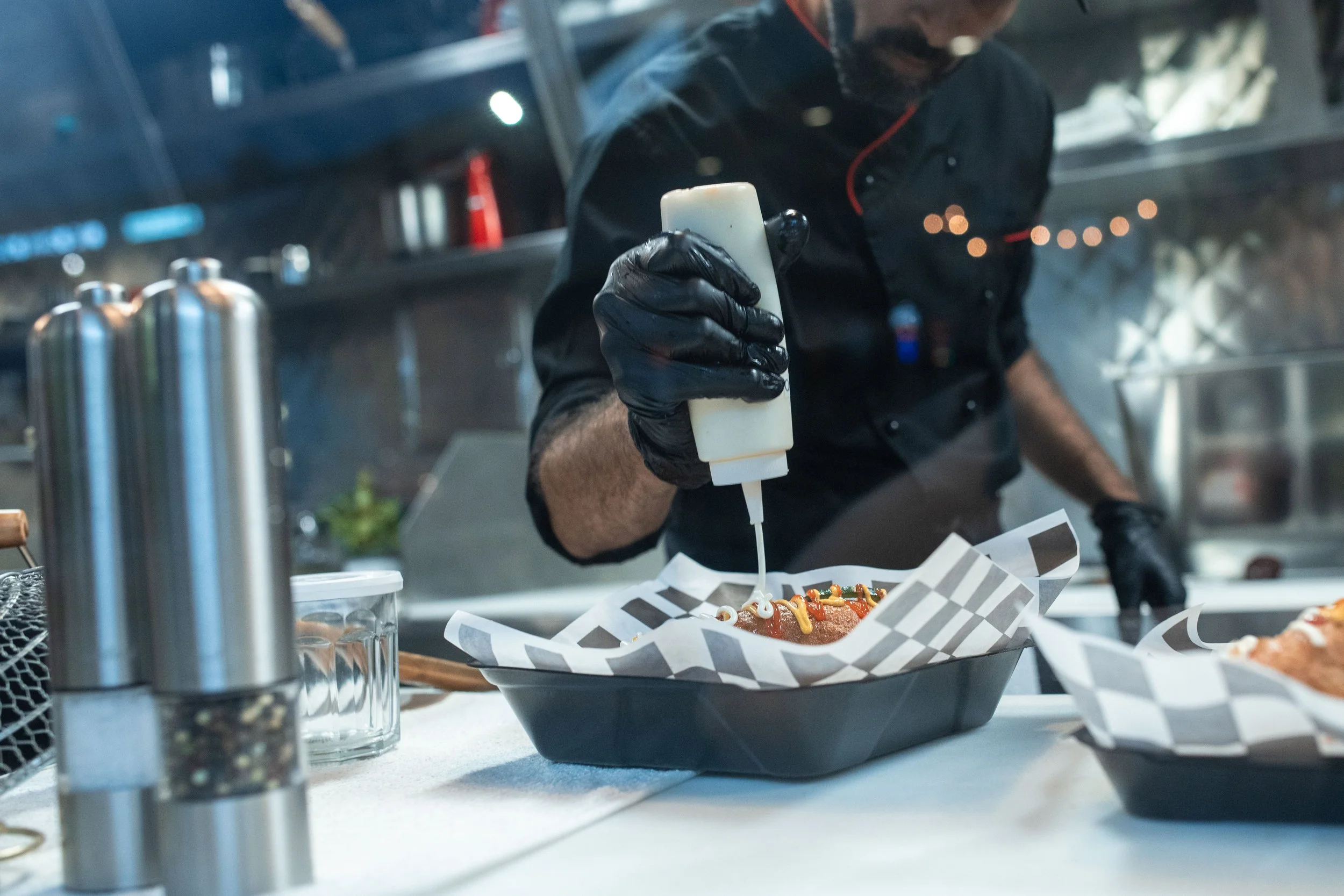
A cloud kitchen is a food business that operates purely for delivery and takeout. There's no dining room, no front-of-house team, and no walk-in trade – just a working kitchen focused on producing food for orders placed online.
You'll also see the model called a ghost kitchen, dark kitchen, or virtual kitchen. The terms are used fairly interchangeably in the UK market, though each carries slightly different connotations depending on who's using it (a dedicated comparison is useful if you want the precise distinctions – for this article, treat them as describing the same core model: delivery-only food production).
How Does a Cloud Kitchen Work?
At its core, a cloud kitchen strips a restaurant down to the parts that actually produce and dispatch food:
Kitchen space and equipment – cooking, prep, and storage, sized for delivery volume rather than a dining room
Staff – chefs and kitchen team, with no need for servers, hosts, or front-of-house
Order management technology – a point-of-sale (POS) or order aggregation system that pulls in orders from your own site and third-party platforms
Delivery – either through aggregators (Deliveroo, Uber Eats, Just Eat) using their driver networks, or through your own delivery fleet if you run one
There are a few ways operators typically access the space itself:
| Model | What it means |
|---|---|
| Shared-space kitchen | Multiple food businesses operate out of the same facility, each with their own staff and equipment, sharing the building and its infrastructure. |
| Dedicated-space kitchen | A single brand rents or leases a kitchen exclusively for its own use, sometimes running more than one menu concept from it. |
| Virtual brand | A new delivery-only concept launched from an existing kitchen – often used to test a menu idea without the cost of opening a new site. |
Whichever model you use, the order flow is broadly the same: a customer orders through an app or website, the order lands in your kitchen system, your team prepares it, and it's picked up for delivery. Speed matters here – the longer food sits between being cooked and reaching the customer, the more quality drops off, so most operators aim to keep prep time as tight as the menu allows.
Looking for kitchen space to run this model from? Explore Encore Kitchens' delivery kitchen spaces across the UK.
Advantages and Disadvantages of Cloud Kitchens
Like any operating model, cloud kitchens involve real trade-offs. Worth weighing both sides before committing.
Advantages
Lower overheads – no dining room, no front-of-house wages, no need for a high-footfall location
Faster, cheaper to launch – significantly less capital tied up than a full restaurant fit-out
Flexibility to test concepts – a kitchen can run more than one brand or menu, making it easier to trial an idea before committing further
Easier to scale geographically – expanding usually means opening in a new kitchen location rather than a full new restaurant
Disadvantages
No walk-in trade – every customer comes through a screen, so visibility depends entirely on your online presence and platform rankings
Delivery platform fees – third-party platforms typically take a commission per order, which compresses margins
Harder to build a brand – without a physical space, brand loyalty has to be built entirely through packaging, food quality, and online reputation
Delivery risk sits outside your control – food quality and timing depend partly on a driver you don't employ
Where Can You Run a Cloud Kitchen?
Before getting into the practical steps, it's worth knowing the main routes food businesses actually use to access kitchen space – since this shapes several of the decisions below.
Renting into a shared or dedicated kitchen facility. The most common route for a new delivery brand: a commercial kitchen space fitted out and compliant before you move in, either shared with other operators or rented for your exclusive use.
Using spare capacity in an existing restaurant kitchen. Some restaurants run a delivery-only brand out of their own kitchen during quieter hours, using infrastructure that's already there rather than taking on additional space.
Building or converting your own premises. A unit fitted out from scratch specifically for commercial cooking. This gives full control over the space but comes with significantly more capital, time, and compliance responsibility, covered in the cost section below.
Cooking from home. Technically possible for very small-scale operations, but home-based food businesses still need to register with the local authority and meet food safety standards, and can also run into planning, space, storage, insurance, and delivery-platform constraints as order volume grows. This route tends to suit testing a concept at very small scale rather than running a genuine delivery-first business.
For most food businesses with any real ambition around order volume, renting into an existing commercial kitchen facility is the practical starting point – which is what the rest of this guide focuses on.
How to Get Started With a Cloud Kitchen in the UK
The sequence below covers what actually needs to happen, in order, rather than a general list of things to "consider."
1. Validate your concept for delivery
Not every dish travels well. Before anything else, test your menu specifically for delivery – how it holds heat, how it packages, and whether it still tastes right 20–30 minutes after it's cooked. This should shape your menu before you shape anything else.
2. Build a lean business plan
Work out your numbers with delivery economics in mind specifically: platform commission (this varies by platform and any rate you negotiate, so check current terms directly with each one rather than assuming a fixed figure), packaging costs, and your realistic order volume. Delivery-only margins behave differently from dine-in margins, and it's worth modelling that before signing anything.
3. Register your food business
You must register your food business with your local authority at least 28 days before you start trading. This is a legal requirement in the UK, applies to delivery-only operations exactly as it does to any restaurant, and is free to do – but it's a hard prerequisite, not paperwork you can catch up on after launch.
Registration is what brings you onto your local authority's radar for a food hygiene inspection, where an officer checks your food handling, storage and temperature control, cleanliness, staff hygiene practices, and your documented food safety management system (HACCP). Timing and frequency of inspections varies by local authority and risk level, but it's worth having these in place from day one rather than treating the inspection as the moment you figure them out. You'll also need to notify HMRC that you're self-employed or operating as a limited company, depending on your setup.
Register a food business – GOV.UK
4. Choose your kitchen space
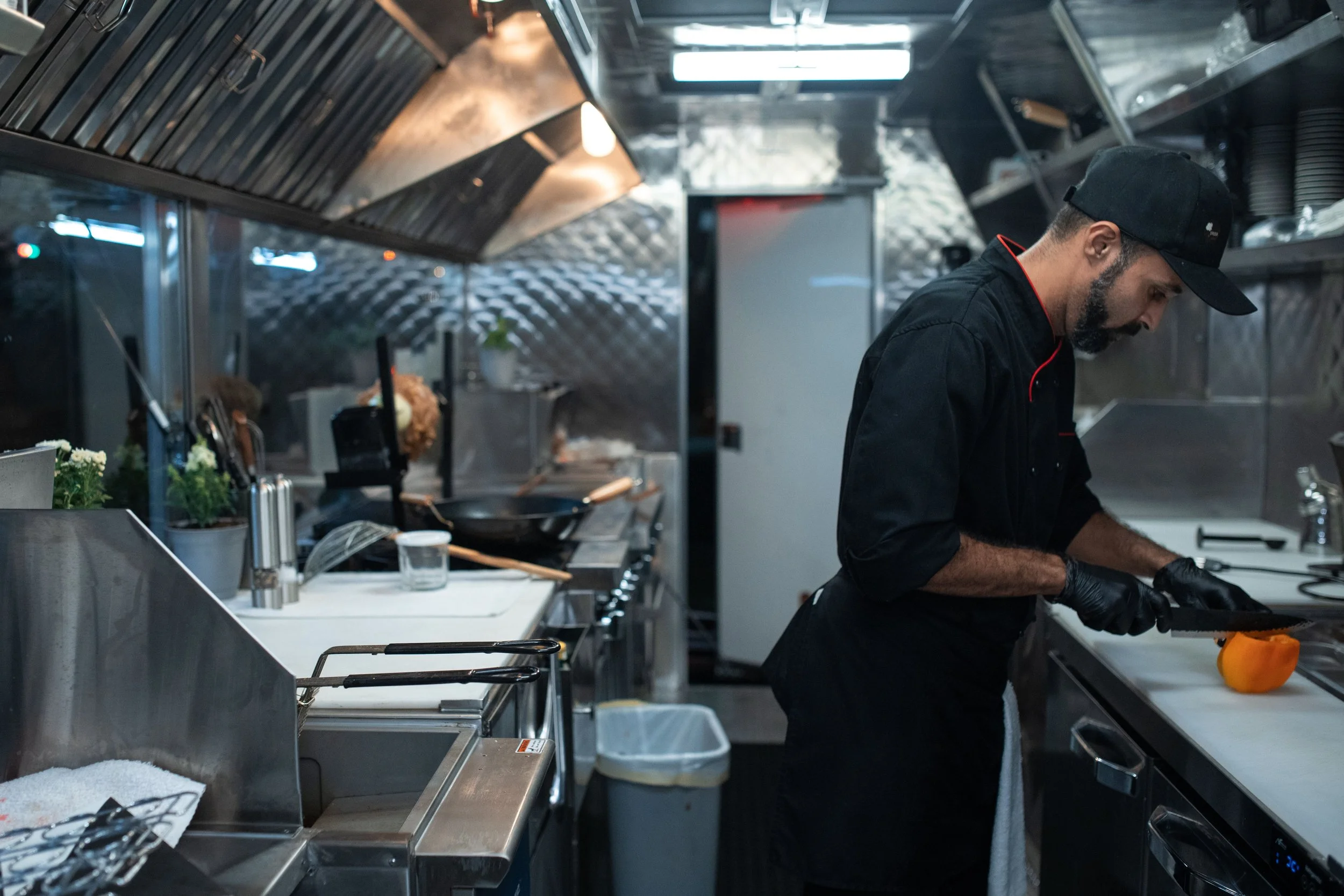
For most food businesses launching a delivery brand, the fastest and lowest-risk route is renting into an existing shared or dedicated kitchen facility that's already fitted for commercial cooking – ventilation, extraction, grease traps, and cold storage already in place and compliant, rather than something you need to design, install, and certify yourself. Building your own unit from scratch is a much larger undertaking – significant capital, a longer timeline, and full responsibility for every piece of infrastructure – and tends to make sense only once a brand has outgrown shared or dedicated rented space, not as a starting point.
When comparing rented kitchen space, the main things worth checking are proximity to your actual target customers (your viable delivery radius depends on your food type, location density, and delivery partner, so it's worth modelling this against real delivery times rather than assuming a fixed distance), contract flexibility as you scale, and what's included versus what you'd need to bring yourself. Encore Kitchens operates fully fitted commercial kitchen space across London and other UK locations, built for food businesses to move straight into.
5. Sort equipment, licensing, and compliance
Commercial kitchen equipment needs to be suitable for the intended commercial use and kept under a regular maintenance and servicing schedule – this matters at inspection and for insurance, not just for day-to-day reliability. If your kitchen uses gas appliances, installation and annual safety checks need to be carried out by a Gas Safe registered engineer. After your first inspection, your local authority will give you a Food Hygiene Rating from 0–5 – displaying it is voluntary in England but a legal requirement in Wales and Northern Ireland. Renting into an already-fitted kitchen typically means a lot of this – extraction servicing, fire risk assessment, pest control – is coordinated centrally by the operator rather than something you have to arrange and track yourself.
Food Hygiene Rating Scheme – GOV.UK
For the fuller picture on ventilation, fire safety, gas safety, and waste rules, Encore's guide to UK commercial kitchen regulations covers what's legally required and what an EHO looks for at inspection.
6. Set up your tech stack
At minimum you'll need a POS or order management system that consolidates orders from multiple sources into one place, rather than juggling separate tablets for each delivery platform – this matters more than it sounds once order volume picks up, since missed or delayed orders on any one platform hit your ratings there. You'll also need accounts with the delivery platforms you plan to sell through (Deliveroo, Uber Eats, and Just Eat are the main UK players, each with their own commission structure and onboarding process). Many operators also run their own website or app as a lower-fee direct ordering channel alongside the aggregators, which helps offset platform commission over time.
7. Design your menu for delivery
Keep it focused. A smaller, well-tested menu that travels reliably tends to outperform a large menu where half the dishes arrive compromised. Packaging choice matters here too – it needs to hold temperature and prevent sogging or spillage over a real delivery window, not just a kitchen pass test.
8. Launch and iterate
Most operators do better soft-launching on one delivery platform, tracking order data and customer feedback closely, and expanding to additional platforms once the operation is running smoothly – rather than launching everywhere at once and troubleshooting blind.
Ready to find kitchen space to launch from? Get in touch with Encore Kitchens to explore available commercial kitchen locations.
What Does It Cost to Start a Cloud Kitchen?
Kitchen space is usually the biggest line item, but it's worth separating what you'll pay to get started from what you'll pay to keep trading.
One-off startup costs
| Cost | What it covers |
|---|---|
| Deposit | Typically due upfront, alongside the first period's fee. |
| Equipment | Cooking and prep equipment not already included in the space. |
| Registration and compliance | Food business registration, HACCP documentation, staff training. |
| Branding | Menu design, photography, and any website or app. |
| Initial stock | Ingredients for launch. |
| Launch marketing | Platform visibility and initial promotion. |
| Cost | What it covers |
|---|---|
| Kitchen rental or membership | Ongoing access to commercial kitchen space. |
| Packaging | Containers, bags, and labels suited to delivery, replenished per order. |
| Technology | POS and order management subscription. |
| Staff | Wages. |
| Delivery fees | Ongoing commission per order, rather than an upfront cost. |
Ongoing operating costs
Kitchen space itself splits into two very different cost brackets depending on the route taken. Renting into fitted space is the lower-capital option: as a real-world example, standard delivery kitchen memberships with Encore Kitchens start from around £2,200 + VAT a month in regional UK cities, rising to £2,750–£3,250 + VAT in London, with a deposit equivalent to one or two months' fee due upfront.
Building or converting your own premises is a different undertaking entirely – depending on scope, fit-out, and equipment, independent builds can run from modest refurbishments into six and seven figures, with a build timeline commonly around 12–16 weeks before trading, longer if planning or licensing runs into delays. Renting into existing space typically means trading within days to a few weeks instead.
Conclusion
A cloud kitchen lowers the capital and time needed to launch a food delivery business, but it doesn't remove the legal and operational groundwork – that part still has to be done properly, whichever route you take. Renting into kitchen space that's already fitted and compliant is what removes the most friction from that process for most new operators. Encore Kitchens provides fully fitted commercial kitchen space across the UK for food businesses at every stage, from first launch to multi-site scaling. Explore Encore's delivery kitchen spaces to see what's available near you.
Looking to Rent a Cloud Kitchen in the UK?
Book a viewing with the Encore Kitchens team to see live availability, pricing, and which site fits your delivery brand.
Frequently Asked Questions
-
Yes. Public liability, employers' liability if you have staff, and product liability cover are standard expectations from both kitchen providers and delivery platforms, on top of the food business registration and hygiene requirements covered above.
-
Not necessarily. Most cloud kitchens rely on the courier networks built into Deliveroo, Uber Eats, and Just Eat rather than employing drivers directly, which avoids the cost and complexity of running a fleet. Some larger or multi-site operators do run their own delivery team for tighter control over the customer experience, but it's not a requirement to get started.
-
Generally yes, since the cost of the space and its infrastructure is spread across multiple tenants rather than covered by one brand alone. A dedicated kitchen costs more, but gives a single business full control over the space, which tends to matter more as order volume or menu complexity grows.
-
This varies by provider, but a fitted kitchen membership typically includes core infrastructure such as extraction, power, and cold storage, with the tenant bringing their own cooking equipment. Some providers also bundle utilities, waste management, pest control, and compliance coordination into the membership fee rather than billing them separately.
-
Your Food Hygiene Rating can matter beyond the standard inspection process – delivery platforms including Deliveroo, Uber Eats, and Just Eat may have their own food-safety and eligibility requirements for listing, and these can change. Worth checking the current requirements of each platform you plan to use rather than treating your rating as a one-off compliance box to tick.
-
It depends on your goals. Cloud kitchens work well for restaurants looking to extend their delivery reach into new areas, test a new concept, or reduce overheads on a delivery-heavy part of the business, but they're not a replacement for a dine-in trade if that's central to your brand.