
What Is a Production Kitchen and How Does It Work?
24 September 2026 | 12 Minute Read
A production kitchen is a commercial kitchen that cooks food in bulk to be eaten somewhere else. Food is prepared, cooked, chilled and packed on site, then sent out to restaurants, cafés, events, shops or wholesale customers. You might also see them called central kitchens, commissary kitchens or central production units (CPUs).
Below, we look at what production kitchens are used for, how food moves through one, the layout and equipment they need, and how to tell whether your business is ready for one.
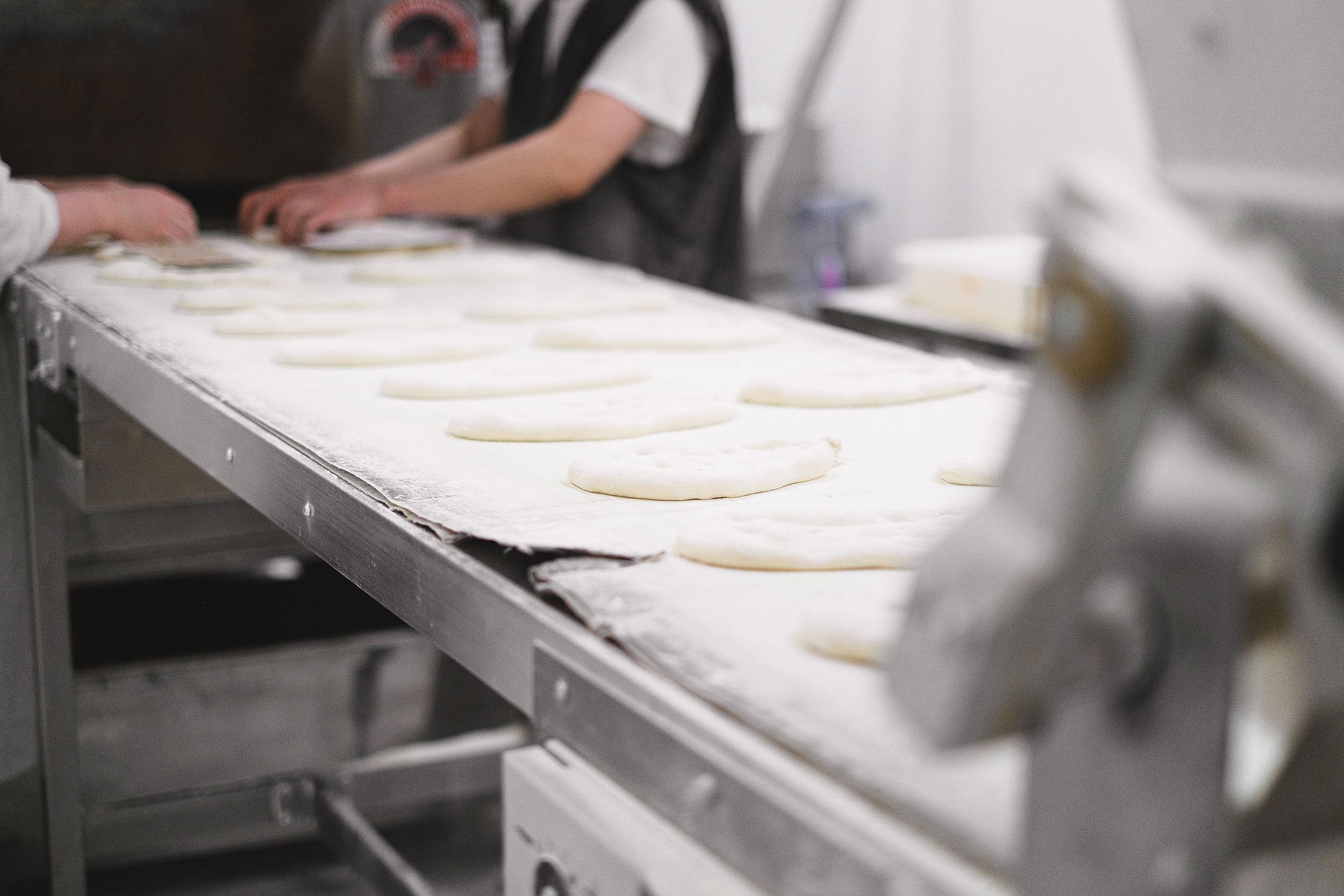
What production kitchens are used for
Most production kitchens exist because a business needs to make food in one place and serve or sell it somewhere else. Some typical setups:
A restaurant group making sauces, doughs and marinades centrally for all its sites
A bakery producing bread and pastries for cafés and wholesale accounts
A caterer cooking for a 500-cover event the day before it happens
A food brand making ready meals for retailers or subscription boxes
These businesses look quite different day to day, but in each case the food is eaten hours or even days after it's cooked, usually at a different address. That delay influences most decisions about how a production kitchen is designed and run.
Production kitchens vs other commercial kitchens
Swipe to see full table →
| Kitchen type | What it's for | How food is cooked | Where the food goes |
|---|---|---|---|
| Restaurant kitchen | Serving diners on site | To order, during service | Straight to the table |
| Dark kitchen (delivery kitchen) | Delivery app orders | To order | Out with a rider, eaten within the hour |
| Catering kitchen | Events and outside catering | In batches, often finished at the venue | Event venues and client sites |
| Production kitchen / CPU | Supplying other sites or customers | In batches, often chilled or frozen before dispatch | Restaurants, shops, wholesale, events |
| Food factory | Large-scale manufacturing | On production lines, often automated | Supermarkets, wholesalers and distributors |
In practice the lines blur. Plenty of caterers run what is effectively a production kitchen, and a production kitchen supplying supermarkets starts to look like a small factory. The more useful question is where the food ends up and how long it has to last before someone eats it. The longer that stretch, the more the kitchen needs to be built around chilling, packing and storage.
How a production kitchen works, step by step
Most production kitchens follow the same sequence, whether they're making 200 portions a day or 20,000.
Goods in. Deliveries are checked against the order, chilled and frozen items are temperature-probed, and everything is logged before it's put away. In a busy kitchen that can mean several pallets before 7am.
Storage. Ingredients go into walk-in chillers, freezers and dry stores. Raw meat and fish are kept apart from ready-to-eat food, and allergen ingredients are stored and labelled so they can't find their way into the wrong product.
Prep. Veg, meat, fish and pastry are often prepped in their own areas. Raw and ready-to-eat food are kept apart through the layout and the order work is done in, using separate rooms where space allows.
Batch cooking. Food is cooked in large quantities on equipment built for volume, such as combi ovens, bratt pans and boiling kettles. Core temperatures are probed and recorded.
Cooling. This is the step that really sets a production kitchen apart. A big pot of stew left on the side can spend hours in the 8–63°C range, where bacteria can grow quickly, so large batches go into a blast chiller instead. For cook-chill production, industry guidance recommends cooling food from around 70°C to below 3°C within 90 minutes. It's a voluntary standard, not a legal requirement, but it's the reason blast chillers are standard kit in most production kitchens.
Portioning, packing and labelling. Cooled food is portioned and packed, whether that's vacuum packing, tray sealing or gastronorm tubs for another kitchen. Packs are labelled with use-by dates, batch codes and allergen information.
Dispatch. Finished food stays in chilled or frozen storage until it's loaded into refrigerated vans, with temperatures recorded at loading.
Cleaning. Pot wash and equipment cleaning run in their own zone, and in larger operations they barely stop.
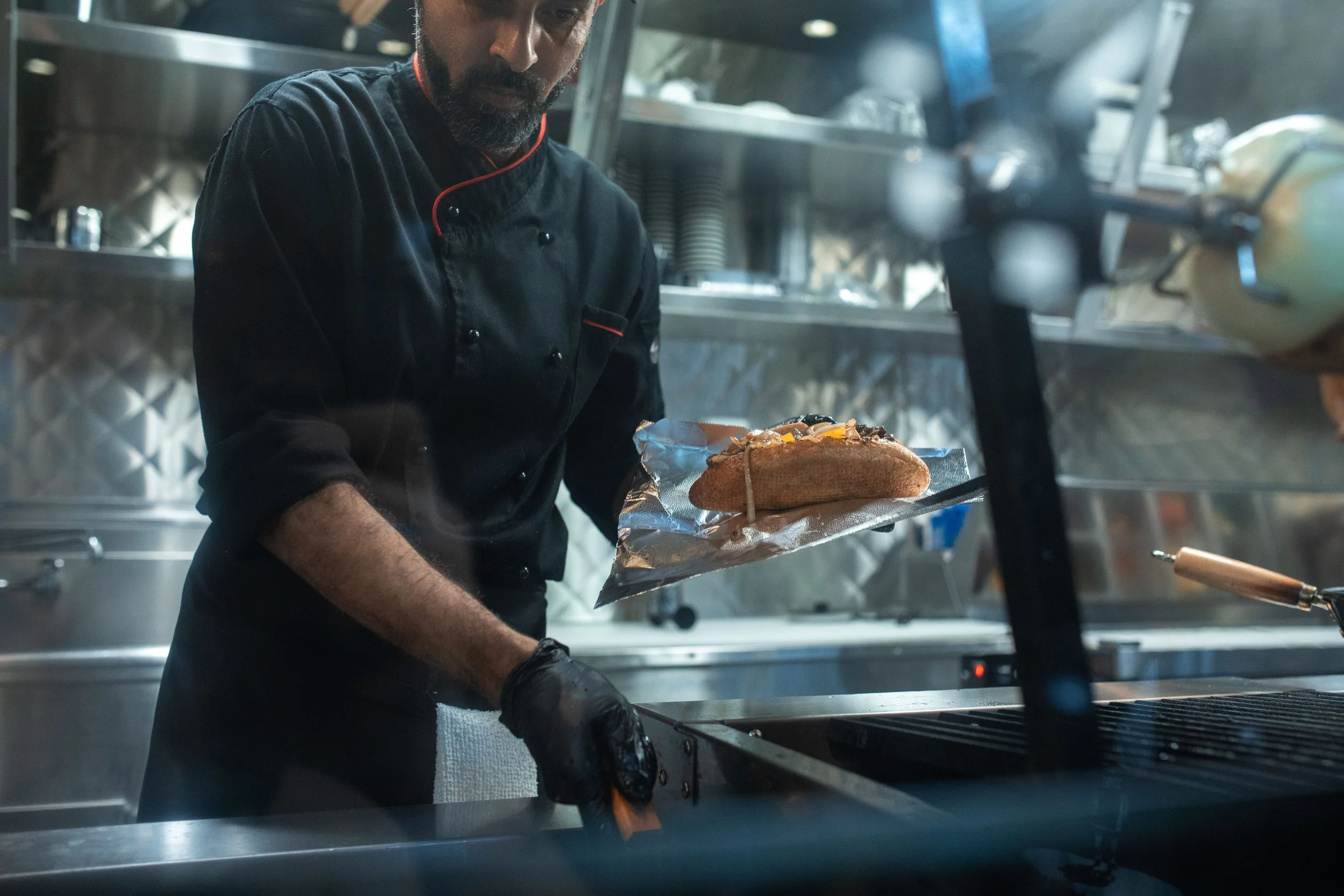
How production kitchens are laid out
The layout follows the workflow. Food should travel in one direction, from goods in at one end to dispatch at the other, without doubling back through areas it's already passed. It sounds obvious. It's also the thing that most often goes wrong when a business tries to convert an ordinary kitchen.
A few principles appear in most well-planned production kitchens:
Separate raw and ready-to-eat areas, ideally with the blast chiller as the crossing point between them.
Handwash stations at the entrance to food areas. When a team of 15 starts a shift at the same time, a single sink by the door means a queue.
Allergen, halal or kosher controls where the menu needs them. Depending on the products and the risk, that might mean a dedicated zone, separate equipment or scheduled production runs.
A wash-up area sized for output. Production kitchens get through a huge number of trays, tubs and utensils, and the pot wash is often the bottleneck nobody planned for.
Loading access close to dispatch, so finished food doesn't have to cross the kitchen to reach the van.
What equipment does a production kitchen need?
The exact kit depends on what you make. Compared with a restaurant, though, most production kitchens need far more capacity for cooking in volume, cooling quickly and storing stock.
Swipe to see full table →
| Area | Typical equipment |
|---|---|
| Storage | Walk-in chillers and freezers, dry store racking, separate allergen storage |
| Prep | Large prep tables, veg prep machines, planetary mixers, slicers |
| Cooking | Combi ovens, bratt pans, boiling or tilting kettles, large-capacity ranges |
| Cooling | Blast chillers and blast freezers |
| Packing | Vacuum packers, tray sealers, label printers, scales |
| Cleaning | Pot wash sinks, pass-through or rack dishwashers, chemical storage |
Two things tend to catch people out. The first is power: a bank of combi ovens and blast chillers draws a lot more electricity than a standard commercial fit-out, and upgrading a building's supply can take months. The second is extraction, which has to cope with batch cooking running for most of the day.
Food safety in a production kitchen
The core food hygiene rules that apply to every UK food business apply to production kitchens too. A few of the basics, which apply across England, Wales, Scotland and Northern Ireland:
Registering the business with its local authority at least 28 days before it starts trading
Running a food safety management system based on HACCP principles
Making sure staff who handle food are supervised and trained in food hygiene
That's only the starting point. Depending on what you make and who you sell it to, other requirements can apply as well. Our guide to UK commercial kitchen regulations sets out the wider picture, from temperature control to ventilation and fire safety.
What stands out in a production kitchen is the amount of food being cooled and stored at once, so cooling methods and temperature records tend to get close attention at inspection.
When does a business need a production kitchen?
There's rarely one moment when it becomes obvious. It's usually a build-up of smaller problems that all point the same way. The most common signs:
Prep is eating into service. Chefs are in at 6am making stocks and sauces, and the kitchen is still full of prep when the first orders land.
The same dish tastes different at each site. Once two or three locations are each making their own version, consistency slips. Making the key components centrally is the usual fix.
You've won a wholesale or retail account. Supplying a café chain, farm shop or retailer brings volume, packing and labelling that a restaurant kitchen isn't set up to handle.
You're turning down catering orders. Big jobs get refused because there's nowhere to cook them without disrupting the day-to-day business.
New sites keep needing full kitchens. With central production, a new site can often run on a smaller finishing kitchen, which opens up units that wouldn't otherwise work.
It can also be too early. If you're running a single site with spare capacity outside service, or you're still testing a product with a handful of stockists, a shared kitchen or hourly kitchen hire is usually the more sensible step. A production kitchen earns its keep once there's enough regular volume to cover the extra space, equipment and running costs.
That doesn't mean it has to be a big operation, though. A common misconception about CPUs is that they only work as huge, high-intensity facilities. In practice, plenty of businesses use them for far smaller and more specific jobs.
Getting started with a production kitchen
Building a production kitchen from scratch means finding a unit with enough power, drainage and loading access, then fitting it with extraction, cold rooms and equipment before a single batch goes out. That's a big commitment to make before the volume is proven. It's the main reason so many growing food businesses rent a fitted production kitchen or CPU for their first move into central production.
Encore Kitchens rents out fitted production kitchens and CPUs in London, Birmingham, Manchester and Leeds. If the workflow above is easier to picture in a real building, you can book a viewing of one of Encore's production kitchens to see how a site is set up and talk through what your business would need.
Ready to Scale Your Production?
Get in touch with the Encore Kitchens team to talk through the right production kitchen for your business.
Frequently Asked Questions
-
Largely, yes. Both describe a kitchen where food is made in bulk and then sent on to be served or sold elsewhere. The difference is mostly in where the term is used. "Commissary kitchen" is the common American name, and in the US it's also used for shared kitchens that food trucks, caterers and small food startups rent by the hour or month. So if you're reading American guides, a "commissary kitchen" might mean a single business's central prep kitchen, or a shared space used by lots of small operators. In the UK, "production kitchen" and "CPU" are the terms commonly used to describe a kitchen run by one business for its own central production.
-
A central production unit, or CPU, is a production kitchen that acts as the main cooking and prep base for a business with more than one outlet or sales channel. The term is used a lot by UK restaurant groups and commercial kitchen landlords, and it usually refers to a self-contained unit with its own storage, cooking, cooling and dispatch areas. A multi-site restaurant group might use a CPU to make sauces, doughs, marinades and prepped proteins for every site. A food brand might use one to supply retail and wholesale customers alongside its own shops. The idea is the same in both cases: make the core components in one controlled place, then send them out.
-
A hub-and-spoke model is a way of running several food outlets from one central kitchen. The hub is the production kitchen, where most of the prep and batch cooking happens. The spokes are the individual sites, such as restaurants, cafés, kiosks or delivery kitchens, which receive that food and finish it for customers. Spoke sites usually have smaller "finishing kitchens" set up for reheating, assembling and plating rather than cooking from scratch. The model helps keep dishes consistent across locations, cuts duplicated prep work, and lets a business open sites where a full kitchen wouldn't fit or wouldn't be affordable.
-
Almost anything that can be made ahead and travel well. Common examples include stocks, sauces and soups, marinated and portioned proteins, doughs and pastry, bread and baked goods, desserts, sandwiches and salads, and complete ready meals. Some production kitchens make finished products for customers to buy, while others make components that another kitchen finishes, such as a curry base, pizza dough balls or braised meat that's portioned and reheated at the restaurant. Food that has to be cooked and served within minutes, like fried food or anything with a delicate texture, tends to stay in the site kitchen.
-
Both methods cook food in advance and then cool it rapidly, but they differ in how cold it goes and how long it lasts. With cook-chill, food is cooled quickly after cooking and kept chilled until it's used. Industry guidance recommends getting it below 3°C within 90 minutes, and shelf life is short, usually a matter of days. With cook-freeze, food is cooled and then frozen in a blast freezer, typically to -18°C or colder, which extends shelf life to weeks or months depending on the product. Cook-freeze suits businesses that need to hold stock longer or send it further, but not every dish freezes well. Some sauces split and some vegetables lose their texture, so recipes often need adjusting.
-
A production chef cooks food in large batches to set recipes and specifications, rather than cooking individual dishes to order. Day to day, that can include scaling recipes up, following a production schedule based on orders from sites or customers, batch cooking and cooling, portioning and packing, and completing the temperature and food safety records the kitchen relies on. Consistency matters more than improvisation, because the same dish has to taste the same whether it's the first batch of the week or the fiftieth. Production kitchens often start early, and many run fewer evening and weekend shifts than restaurants, which is part of their appeal for chefs.
-
Up to a point, and many businesses start this way. A restaurant might prep sauces or bake bread for a second site before service begins each morning. That usually works while volumes are small. It starts to break down when prep runs into service hours, when the kitchen has no blast chiller or enough cold storage to hold extra stock safely, or when there's no proper space to pack, label and load food for transport. At that point, a business usually either reorganises the restaurant kitchen around production or moves production into a separate space.
-
For some small food businesses, yes, at least at the start. A home kitchen can be registered as a food business with the local authority, and many bakers, cake makers and small caterers begin that way. It gets harder as volumes grow. Domestic kitchens rarely have the cold storage, cooling equipment or separate prep space that bulk production needs, and higher-risk foods like cooked meats or chilled ready meals are much harder to manage safely at home. It's also worth checking whether planning permission, your mortgage or tenancy terms, and your insurance allow food production from home before scaling up.